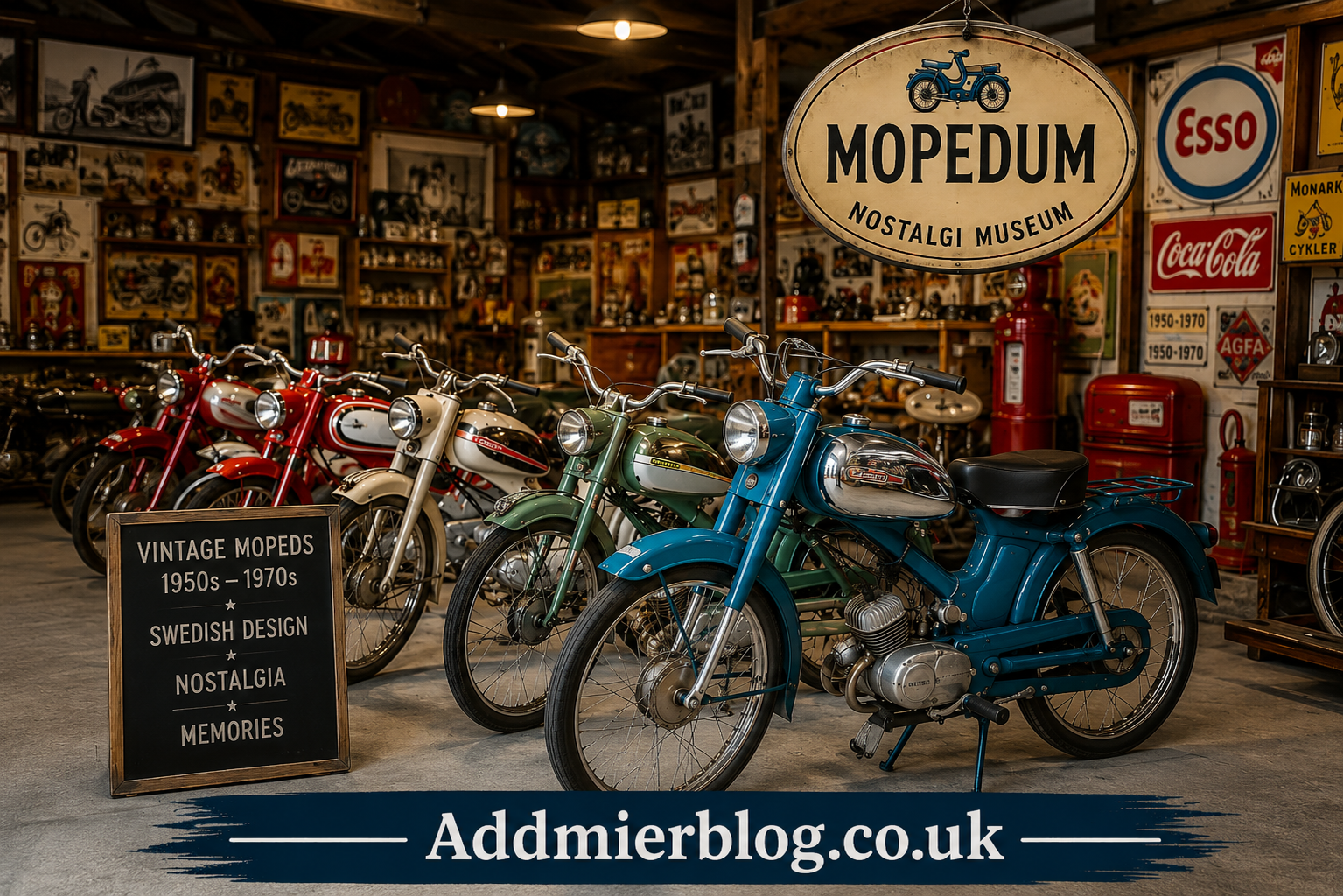
Introduction to Mopedum
Mopedum is a name linked with vintage mopeds, Swedish nostalgia, and the culture of small two-wheeled transport from the mid-20th century. It is best understood in two ways: first, as the former Swedish nostalgia museum in Nynäshamn, and second, as an online space focused on veteran mopeds, classic scooters, rare collections, and moped history. Public listings describe the original museum as a place that took visitors back to the 1950s, 1960s, and 1970s through old mopeds and everyday objects from that period. The museum listing also notes that it closed permanently in December 2022.
What Is Mopedum?
Mopedum is centred on veteran mopeds and the memory of a period when mopeds were a common part of everyday transport. The current Mopedum website presents itself around “veteranmopeder och nostalgi,” meaning veteran mopeds and nostalgia. It highlights vintage mopeds, exclusive mopeds and scooters, rare collections, and what it calls the golden age of the moped.
The topic is not only about machines. It is also about social history. Mopeds were practical vehicles for young people, workers, hobby riders, and families who needed low-cost mobility. In Sweden and other parts of Europe, they became part of daily life during the decades after World War II. Mopedum uses that background to connect vehicle history with memory, design, repair culture, and collecting.
The Museum Background
The former Mopedum museum was located at Vikingavägen 39 in Nynäshamn, Sweden. It was described as a nostalgia museum where visitors could see old mopeds along with cultural items from the 1950s, 1960s, and 1970s. The listing mentions objects such as foosball, Carmen Curlers, and draft beer as part of the wider period setting.
This matters because Mopedum was not presented as a simple vehicle display. It placed mopeds inside the lifestyle of their time. A visitor could look at a moped and also understand the music, shops, design, brands, and habits that surrounded it. That approach made the museum more like a time capsule than a garage.
Focus on the Golden Age of Mopeds
Mopedum’s historic material often points to the years from 1952 to 1979 as an important period for moped development. A motorcycle museum archive describes Mopedum as a place where visitors could follow the moped’s development during its golden age, beginning in 1952 and moving through later decades.
That period is important because mopeds were simple, affordable, and easy to maintain. They were not luxury vehicles. They filled a practical need. For many people, a moped meant freedom before car ownership. It allowed riders to travel to work, school, shops, and nearby towns without depending fully on buses or bicycles.
Why Vintage Mopeds Still Matter
Vintage mopeds continue to attract attention because they are mechanical, visible, and easy to understand compared with many modern vehicles. Their engines, frames, seats, fuel tanks, lights, and badges show clear design choices. Collectors often value them not only for brand names but also for originality, condition, and period-correct details.
Mopedum’s current online focus reflects this interest. Its site includes topics such as buying a veteran moped, popular classic models, caring for vintage mopeds, the history of Monark, Swedish moped vehicles, and the origin of the moped. This shows that the subject has moved beyond museum display into education, collecting, and maintenance advice.
Mopedum and Swedish Nostalgia
The Swedish angle is central to Mopedum. Sweden has a strong transport and engineering history, and mopeds became part of that wider story. Brands such as Monark and Husqvarna are often linked with Swedish cycling and moped heritage. The Mopedum website also features content about Monark’s history, showing how brand identity is part of the subject.
Nostalgia here does not only mean looking back emotionally. It also means preserving objects that explain ordinary life. A moped can show how people travelled, how products were designed, how youth culture changed, and how local industries supported transport needs.
What Visitors and Readers Can Learn
A person learning about Mopedum can understand several things. First, mopeds were more than small motor vehicles. They represented affordable movement. Second, the design of a moped tells a lot about its era. Third, restoration and collecting require patience, research, and respect for original parts.
The current website continues the subject digitally by focusing on veteran mopeds, rare collections, and moped care. This makes Mopedum useful for readers who want a basic introduction before going deeper into Swedish moped history.
Buying and Preserving a Veteran Moped
One practical side of Mopedum is guidance for people interested in buying or keeping vintage mopeds. Older mopeds can be enjoyable projects, but buyers need to check condition, documents, parts availability, engine state, frame rust, and originality. A low price can become expensive if key parts are missing or if the model is hard to repair.
Preservation also matters. A veteran moped should not be treated like a disposable machine. Cleaning, careful storage, correct fluids, tyre checks, and proper handling of old paint and chrome can protect its value. For collectors, originality is often more important than over-restoration.
The Cultural Value of Mopedum
Mopedum has cultural value because it keeps attention on a form of transport that shaped daily life for many people. Cars and motorcycles often receive more attention in transport history, but mopeds had their own place. They were smaller, cheaper, and more accessible.
The former Mopedum museum connected these machines with wider memories of shops, youth culture, home life, and public spaces. That made it easier for older visitors to remember their own experiences and for younger visitors to understand a period they did not live through. The museum listing even encouraged visitors to bring grandparents so they could explain what life was like at the time.
Mopedum After the Museum Closure
The physical museum is reported as permanently closed, but the name still remains connected with vintage moped culture online. This is an important point for readers searching for Mopedum. They may find references to the museum, old visitor reviews, archived pages, and the current Mopedum website. These sources point to the same general subject but not always the same current status.
That means anyone planning a visit should check carefully before travelling. Based on public listings, the former museum site is no longer operating as it once did. However, the online material remains useful for learning about veteran mopeds and Swedish nostalgia.
Conclusion
Mopedum is a useful starting point for anyone interested in veteran mopeds, Swedish transport history, and mid-century nostalgia. Its identity comes from both the former Nynäshamn museum and the current online focus on classic mopeds, rare collections, and the golden age of small motor vehicles. The topic is simple but rich: small machines, everyday mobility, brand history, restoration, and memory.
For readers, Mopedum offers more than a look at old mopeds. It shows how transport can become part of family stories, local culture, and national design history. That is why the name still matters even after the physical museum’s closure.