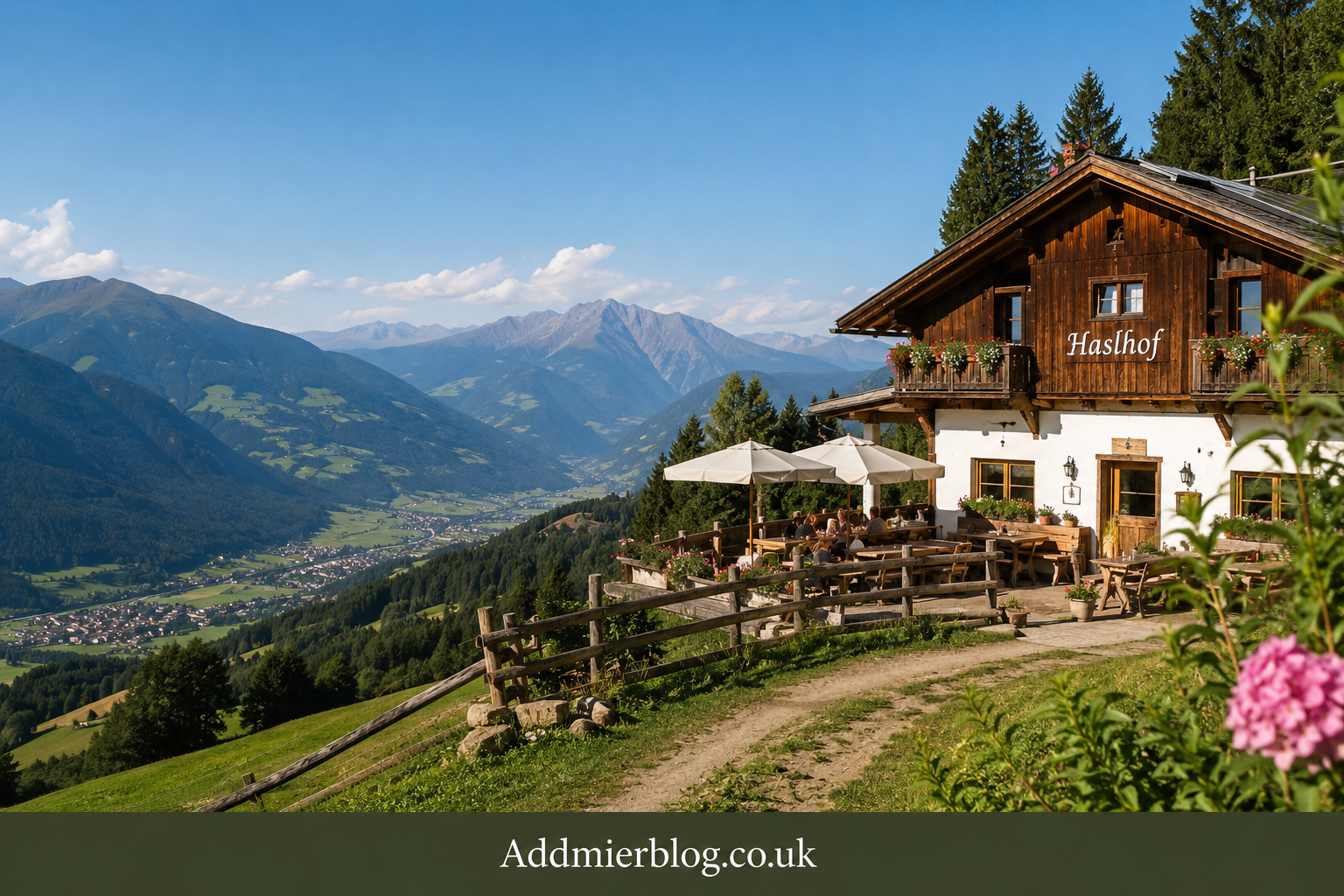
Introduction to Haslhof
Haslhof is a mountain farm inn located above Schlanders, also known as Silandro, in South Tyrol’s Vinschgau Valley. It is not a large hotel, a resort, or a mass tourism attraction. It is better understood as a traditional rural stop where visitors come for food, landscape, and a slower experience of mountain life. Set on the Nördersberg side of the valley, Haslhof sits among meadows, woodland, and alpine terrain, offering views over the surrounding valley and mountains.
The name Haslhof may also refer to other small places in Austria and Bavaria, but in travel and food contexts it is most often connected with the South Tyrolean farm inn known as Jausenstation or Gasthaus Haslhof. The site is listed as being at about 1,574 metres above sea level and is known for homemade South Tyrolean dishes, a sun terrace, and access for hikers and cyclists.
Where Haslhof Is Located
Haslhof is situated on Monte Tramontana, or Nördersberg, above Schlanders in the Vinschgau area of South Tyrol. Schlanders is one of the main towns in the valley and serves as a practical base for people exploring this part of northern Italy.
The setting is important because Haslhof is not positioned in the centre of town. It stands higher up the mountain side, away from the main road and closer to the rural landscape. The location gives it the feel of a working countryside stop rather than a standard restaurant street venue.
According to South Tyrol tourism listings, Jausenstation Haslhof is located at Monte Tramontana 25 and is described as a farm bar with a panoramic view. Restaurant listings also place it at Nördersberg 25, 39028 Schlanders, and describe it as a mountain refreshment stop with wide views.
What Haslhof Means for Visitors
For visitors, Haslhof is mainly about three things: regional food, mountain scenery, and a quiet rural atmosphere. It does not depend on large entertainment features or heavy tourist infrastructure. Its appeal comes from the simple experience of reaching a mountain farm inn, sitting down for a meal, and looking over the valley.
The word “Jausenstation” is commonly used in German-speaking alpine areas. It refers to a place where walkers, cyclists, and travellers can stop for a snack, meal, or drink. In South Tyrol, these places often serve homemade food and local products. Haslhof follows that tradition.
The official website describes Haslhof as being between meadows, forest, and mountains above Schlanders. It highlights homemade South Tyrolean dishes, honest hospitality, and a sun terrace with a wide view into the valley. This description gives a clear idea of what visitors should expect: not luxury service, but a grounded farm inn experience.
The Landscape Around Haslhof
Haslhof benefits from this geography because it sits high enough to offer a broad view while remaining reachable from Schlanders.
The Nördersberg side is generally associated with forested slopes, hiking paths, mountain farms, and quieter routes. This makes Haslhof suitable for people who want to combine a meal with walking, cycling, or a scenic drive.
Outdoor listings describe Haslhof as having a large terrace with views into the Vinschgau and Martell Valley. They also note that the farm inn uses mainly farm-owned products and has its own stable, animals, and garden. These details matter because they show that Haslhof is connected to its local setting rather than operating as a detached tourist business.
Food and Local Character
Food is one of the main reasons people visit Haslhof. South Tyrolean cuisine is shaped by both Alpine and Italian influences. In mountain inns, meals often focus on filling dishes, seasonal ingredients, and recipes that fit rural life.
Haslhof is described by its own website as serving homemade South Tyrolean dishes.
The exact menu can change, so visitors should check directly before going. However, places like Haslhof usually attract guests who are looking for regional meals rather than fast food or formal dining. The experience is often more relaxed. Guests may come after a hike, during a bike tour, or simply for lunch with a view.
This is part of what gives Haslhof its identity. It is not only a place to eat. It is a place where the meal is tied to the land, the route, and the pace of the mountain setting.
Haslhof as a Stop for Hikers and Cyclists
Because of its position above Schlanders, Haslhof works well as a stop for people exploring the mountain area. Hikers can use it as a rest point during a route, while cyclists may see it as a reward after climbing from the valley.
This is important because it shows the inn’s role in local outdoor activity. It is not designed only for people arriving by car. It also belongs to the rhythm of mountain movement.
For many visitors, reaching a place like Haslhof is part of the experience. The road, the climb, the changing view, and the arrival at the terrace all contribute to the visit. That is different from stopping at a restaurant in a town centre.
Why Haslhof Attracts Attention
Haslhof attracts attention because it represents a kind of tourism that remains close to local life. Travellers who visit South Tyrol often look for places that feel connected to the region. A farm inn above a valley fits that interest.
The attraction is not based on large advertising or famous landmarks. Instead, Haslhof stands out through practical qualities: its setting, terrace, food, and traditional role as a refreshment stop. Tripadvisor lists Haslhof in Silandro with visitor reviews, showing that it has gained attention among travellers looking for local dining options.
For people writing about rural South Tyrol, Haslhof is a useful example of how small mountain businesses support tourism without losing their local character. It gives visitors a direct way to experience food, place, and daily rural culture in one stop.
The Role of Farm Inns in South Tyrol
To understand Haslhof properly, it helps to understand the role of farm inns in South Tyrol. These places often sit between agriculture and hospitality. They may operate as working farms while also serving meals to visitors.
This model supports local food culture and gives small farms another source of income. It also helps preserve rural buildings, family businesses, and traditional cooking. Visitors benefit because they get access to places that are more personal and less standardised than many commercial restaurants.
Haslhof appears to fit this pattern. Outdooractive describes it as a farm tavern with mostly farm-owned products, animals, and a large garden. That gives the place a stronger rural identity than a restaurant that simply uses mountain imagery for branding.
What to Expect During a Visit
Visitors should expect a simple and direct experience. Haslhof is a place for a meal, a drink, a view, and a pause. It is not the kind of location where people should expect urban restaurant speed or resort-style services.
The atmosphere is likely to be informal. Guests may arrive in hiking clothes, cycling gear, or casual travel wear. The terrace is an important part of the experience, especially in good weather. Since the inn is positioned high above the valley, visibility and weather conditions can shape the visit.
Opening hours may vary by season or business schedule. Some listings show regular daytime hours, while social media and official pages may provide the latest updates. Restaurants.st lists opening hours from 10:00 to 18:00 on several days, but visitors should still confirm before travelling because mountain inns can adjust hours due to season, weather, holidays, or family operations.
Practical Travel Considerations
Anyone planning to visit Haslhof should check the route in advance. Mountain roads can be narrow, and travel times may be longer than they appear on a map. Visitors without a car should check local transport and walking options before setting out.
For hikers and cyclists, preparation matters. Even if the route is not extreme, altitude, weather, and road gradients can affect the experience. Water, suitable footwear, and a realistic sense of timing are useful.
It is also wise to check whether reservations are recommended. Smaller farm inns may have limited seating, especially on terraces during good weather or weekends. The official Haslhof website mentions reservations and provides contact information, which suggests that planning ahead can be useful.
Haslhof and the Identity of Vinschgau
Haslhof also reflects the wider identity of Vinschgau. It is also about agriculture, mountain settlements, language, and food traditions. South Tyrol itself has a mixed cultural background, with German and Italian influences visible in place names, menus, and daily life.
The fact that Haslhof is referred to through both German and Italian geographic terms, such as Nördersberg and Monte Tramontana, shows this cultural layering. Visitors will often see both language forms in the region.
This makes Haslhof more than a dining stop. It is part of a local cultural landscape where farms, valleys, roads, and mountain routes still shape how people move and gather.
Why Haslhof Is Not a Typical Tourist Spot
Many tourist places try to create an experience. Haslhof’s appeal is that it does not need to be heavily staged. Its value comes from where it is and what it does.
A visitor comes for food and views, but also for a sense of place. The mountain setting gives context to the meal. The farm connection gives context to the food. The terrace gives context to the pause. These simple elements explain why small places like Haslhof remain important in alpine tourism.
It is not a destination for everyone. Travellers looking for nightlife, shopping, or luxury facilities may not find what they want there. But for people interested in rural food culture, mountain scenery, and quiet local stops, Haslhof offers a clear and practical experience.
Conclusion
Haslhof is best understood as a traditional South Tyrolean mountain farm inn above Schlanders in the Vinschgau Valley. It offers homemade regional food, a terrace with valley views, and a setting shaped by meadows, forest, and mountains. Its role is simple but meaningful: it gives hikers, cyclists, and visitors a place to stop, eat, and take in the landscape.
The importance of Haslhof does not come from size or fame. It comes from its connection to place. It represents a form of rural hospitality that remains close to farming, local food, and mountain travel. For anyone exploring South Tyrol beyond the main roads and town centres, Haslhof offers a grounded introduction to the region’s everyday alpine character.