Wollmatten: A Complete Guide to Uses, Benefits, Materials, and Practical Applications
Tags: Wollmatten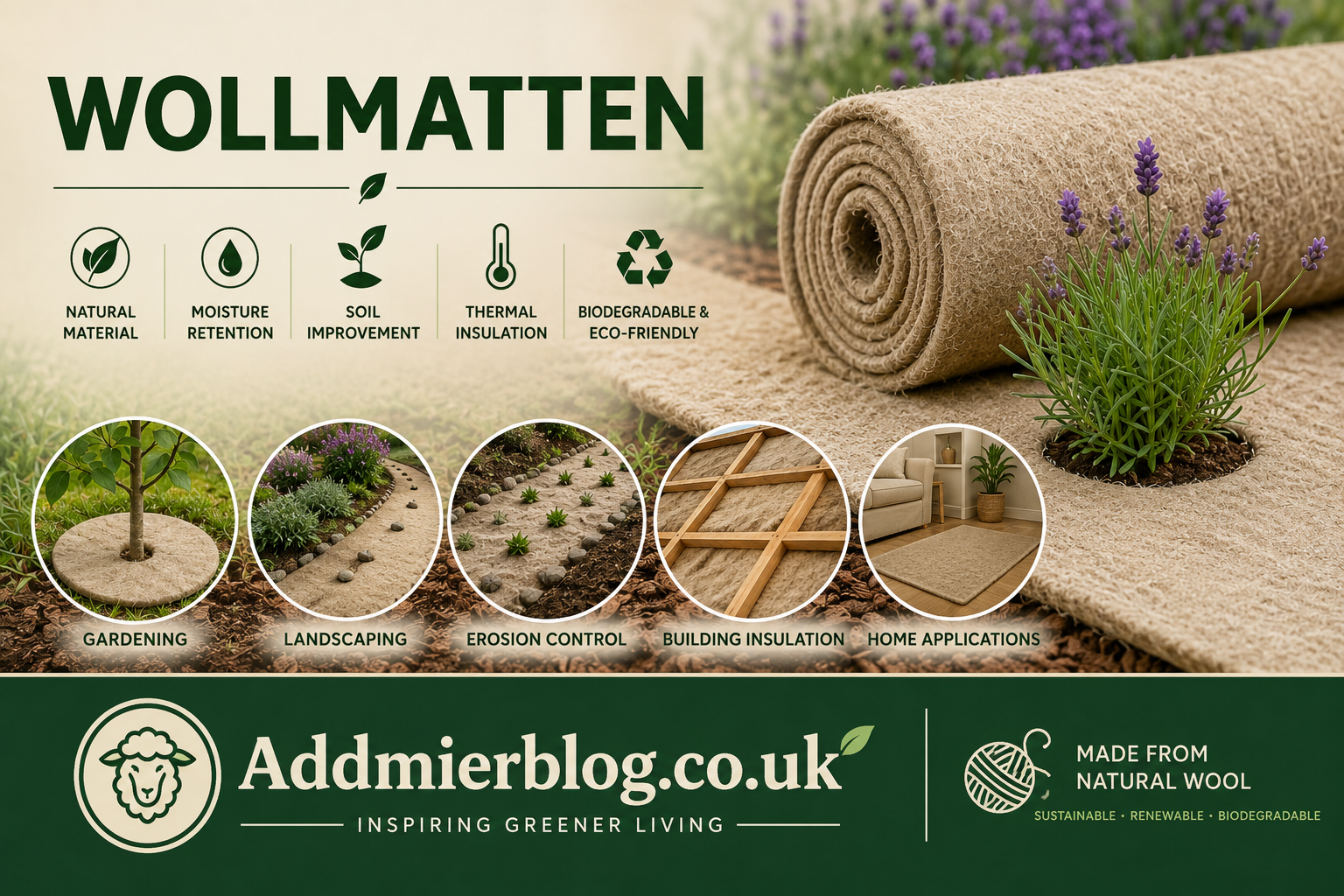
Introduction to Wollmatten
Wollmatten are mats made primarily from natural wool fibers and are used in a wide range of industries, including gardening, landscaping, construction, erosion control, insulation, and home furnishing. The term combines the German words “Wolle” (wool) and “Matten” (mats), reflecting their origin and common use in German-speaking regions before becoming widely recognized internationally. Unlike synthetic mats made from plastic or petroleum-based materials, wollmatten rely on renewable natural wool that offers practical benefits without creating long-term plastic waste. Their structure allows them to perform several functions at once, including moisture retention, temperature regulation, soil protection, and natural decomposition over time. Because wool is rich in nutrients such as nitrogen, it gradually breaks down and returns organic matter to the soil instead of becoming landfill waste.
What Are Wollmatten?
Wollmatten are compressed or woven mats manufactured from sheep’s wool or processed wool fibers. Depending on the intended application, the wool may be felted, needle-punched, woven, or bonded into sheets of different thicknesses. These mats can be produced in rolls, circular discs, rectangular panels, or custom-cut shapes suitable for specific industrial or agricultural needs.
The natural properties of wool make these mats suitable for environments where moisture management, insulation, or biodegradable protection is required. Wool fibers contain microscopic air pockets that improve thermal insulation while still allowing air circulation. This combination makes wollmatten useful in situations where maintaining stable environmental conditions is important.
How Wollmatten Are Made
The manufacturing process begins with collecting raw sheep wool. The wool is cleaned to remove dirt, grease, and vegetable matter before being sorted according to fiber quality. Depending on the product design, the fibers may be blended with other natural fibers or used in their original form.
The cleaned wool is then processed using mechanical techniques that lock the fibers together without requiring large amounts of chemical adhesives. Needle punching is one of the most common production methods because it creates dense mats while preserving the flexibility of the material. Some manufacturers also use heat and moisture to produce felted wool mats.
After the material reaches the desired density and thickness, it is trimmed into standard sizes or cut according to customer requirements. Quality testing generally includes checking fiber density, water absorption, durability, and dimensional consistency.
Materials Used in Wollmatten
Most wollmatten are made from 100 percent sheep wool, although some products combine wool with other biodegradable natural fibers to improve strength or reduce production costs. Depending on the intended use, manufacturers may also apply treatments that improve resistance to insects, mold, or weather exposure while maintaining the biodegradable nature of the product.
The selection of raw wool affects the finished product. Longer fibers generally produce stronger mats, while finer wool creates softer surfaces suitable for indoor applications. Recycled wool is also increasingly used in commercial production, reducing waste while maintaining functional performance.
Common Applications of Wollmatten
One of the reasons wollmatten have gained attention is their versatility. The same material can be adapted for several industries without major changes in manufacturing.
Gardening
In gardening, wollmatten are often placed around plants to reduce water evaporation from the soil. The wool absorbs rainfall and irrigation water before releasing moisture gradually to surrounding roots. This helps maintain more consistent soil conditions during dry periods.
The mats also reduce weed growth by limiting sunlight reaching the soil surface. Instead of relying entirely on chemical weed control, gardeners can use wool mats as a physical barrier.
Landscaping
Landscape professionals frequently install wollmatten on newly planted areas, flower beds, slopes, and decorative gardens. Besides helping plants establish stronger root systems, the mats improve soil stability while reducing maintenance requirements.
Their natural appearance also blends well with outdoor environments compared to plastic ground covers.
Agriculture
Farmers use wollmatten for crop production, tree planting, vineyards, and orchards. Around young trees, wool mats protect roots from temperature fluctuations while reducing competition from surrounding weeds.
As the wool slowly decomposes, nutrients are released into the soil, providing additional support for plant growth over an extended period.
Erosion Control
On hillsides and exposed soil surfaces, wollmatten reduce erosion caused by rain and wind. The fibrous structure holds loose soil particles together until vegetation becomes established.
Unlike permanent synthetic erosion-control materials, wool mats naturally decompose after fulfilling their purpose, eliminating the need for later removal.
Building Insulation
Wool has been used as an insulating material for centuries. Modern wollmatten are sometimes incorporated into walls, roofs, and flooring systems where thermal and acoustic insulation is required.
The fibers help regulate indoor humidity by absorbing and releasing moisture without losing their insulating properties. This contributes to more stable indoor conditions.
Home Applications
In residential settings, wollmatten can be used as floor mats, furniture padding, pet bedding, decorative felt products, and sound-absorbing panels. Their soft texture and insulating qualities make them practical in several indoor environments.
Moisture Management
One of the most valuable characteristics of wool is its ability to absorb significant amounts of moisture while remaining relatively dry to the touch. Wollmatten can absorb water during rainfall or irrigation and gradually release it as surrounding conditions become drier.
This controlled moisture regulation reduces sudden fluctuations in soil hydration. Plants receive a steadier supply of water, helping reduce stress caused by repeated drying and wetting cycles.
In indoor applications, the same property assists in balancing humidity levels by temporarily storing excess moisture from the air before releasing it when humidity decreases.
Thermal Insulation
Wool fibers naturally trap air inside their structure. Since trapped air slows heat transfer, wollmatten provide effective thermal insulation without relying on synthetic foam materials.
For gardening, this insulation protects roots against rapid temperature changes during both warm and cool seasons.
Soil Improvement
As wool decomposes, it releases nutrients that contribute to soil fertility. Nitrogen is one of the most important elements contained within wool fibers. Over time, microorganisms break down the material, making nutrients available to plants.
Unlike synthetic ground covers that remain unchanged for years, wollmatten gradually become part of the soil ecosystem. This natural decomposition reduces waste while improving soil structure and organic matter content.
Environmental Benefits
Environmental considerations have contributed significantly to the increasing use of wool-based products. Since sheep produce wool annually, it represents a renewable natural resource.
After use, wollmatten decompose naturally under suitable environmental conditions without leaving plastic fragments behind. This reduces long-term waste compared to conventional synthetic landscape fabrics.
The production process also often requires fewer petroleum-based raw materials than plastic alternatives. When recycled wool is incorporated into manufacturing, resource efficiency improves further.
Advantages of Wollmatten
Several practical benefits explain why wollmatten continue to be adopted across different industries.
- Made from renewable natural wool
- Biodegradable after use
- Excellent water absorption
- Gradual moisture release
- Helps reduce weed growth
- Supports soil health
- Provides thermal insulation
- Reduces erosion
- Improves root protection
- Suitable for indoor and outdoor applications
- Can be produced from recycled wool
- Requires minimal maintenance after installation
These characteristics allow a single material to address multiple environmental and functional requirements simultaneously.
Limitations
Although wollmatten provide many benefits, they are not suitable for every situation.
Natural wool gradually decomposes, meaning the mats eventually require replacement if long-term ground coverage is needed. In areas with extremely high moisture, decomposition may occur more quickly than expected.
The initial purchase cost can also be higher than some synthetic alternatives. However, this difference may be offset by reduced maintenance requirements and environmental benefits.
Some untreated wool products may also require protection against insects depending on storage conditions and intended use.
Installation
Installing wollmatten is generally straightforward. The mat is then placed directly onto the prepared soil and secured using biodegradable pegs or landscape anchors if necessary.
Plants can be inserted through pre-cut openings or holes created during installation. After placement, watering helps the wool settle against the soil surface and begin its moisture-regulating function.
For erosion-control projects, overlapping adjacent mats helps prevent exposed gaps where runoff could occur.
Maintenance
Maintenance requirements remain relatively low. Periodic inspection ensures the mat remains properly positioned and continues covering the intended area.
Additional watering may be necessary during plant establishment, although the moisture-retention capacity often reduces irrigation frequency. As decomposition progresses over months or years, replacement can be performed if continued protection is required.
Indoor wool mats require routine cleaning appropriate for natural wool products, depending on their specific use.
Comparison With Synthetic Mats
Synthetic landscape fabrics primarily function as physical barriers against weeds. While effective in some applications, they usually do not contribute nutrients to the soil and often remain in place for many years before disposal.
Wollmatten perform several additional functions beyond weed suppression. They regulate moisture, improve insulation, release nutrients, and naturally decompose after use.
The choice between natural wool and synthetic materials depends on project goals, expected lifespan, maintenance preferences, and environmental priorities.
Industries Using Wollmatten
Demand for wollmatten extends across multiple sectors.
Agricultural businesses use them for crop production and tree establishment. Landscaping companies install them in public parks, gardens, and restoration projects. Construction firms use wool insulation in environmentally focused building designs. Garden centers sell consumer versions for home gardening. Environmental restoration projects also use wool mats to stabilize disturbed soil while encouraging vegetation recovery.
Their adaptability has allowed the product to move beyond traditional gardening into broader commercial applications.
Future Outlook
Interest in biodegradable materials continues to encourage research into natural fiber products. Manufacturers are developing improved production methods that increase durability while maintaining biodegradability. New applications are also being explored in horticulture, sustainable construction, water management, and environmental restoration.
As industries seek alternatives to long-lasting plastic materials, wool-based products are expected to remain relevant because they combine practical performance with natural decomposition. Continued innovation in processing techniques and recycled fiber use may further expand the range of wollmatten available for commercial and residential applications.
Conclusion
Wollmatten are natural wool mats designed for practical applications in gardening, agriculture, landscaping, erosion control, construction, and indoor environments. Their ability to retain moisture, regulate temperature, suppress weeds, improve soil, and decompose naturally makes them different from conventional synthetic mats. Rather than serving a single purpose, they provide multiple functions through the natural characteristics of wool fibers. While they require eventual replacement due to biodegradation, their environmental advantages and functional performance continue to support their use in projects where renewable, biodegradable materials are preferred.