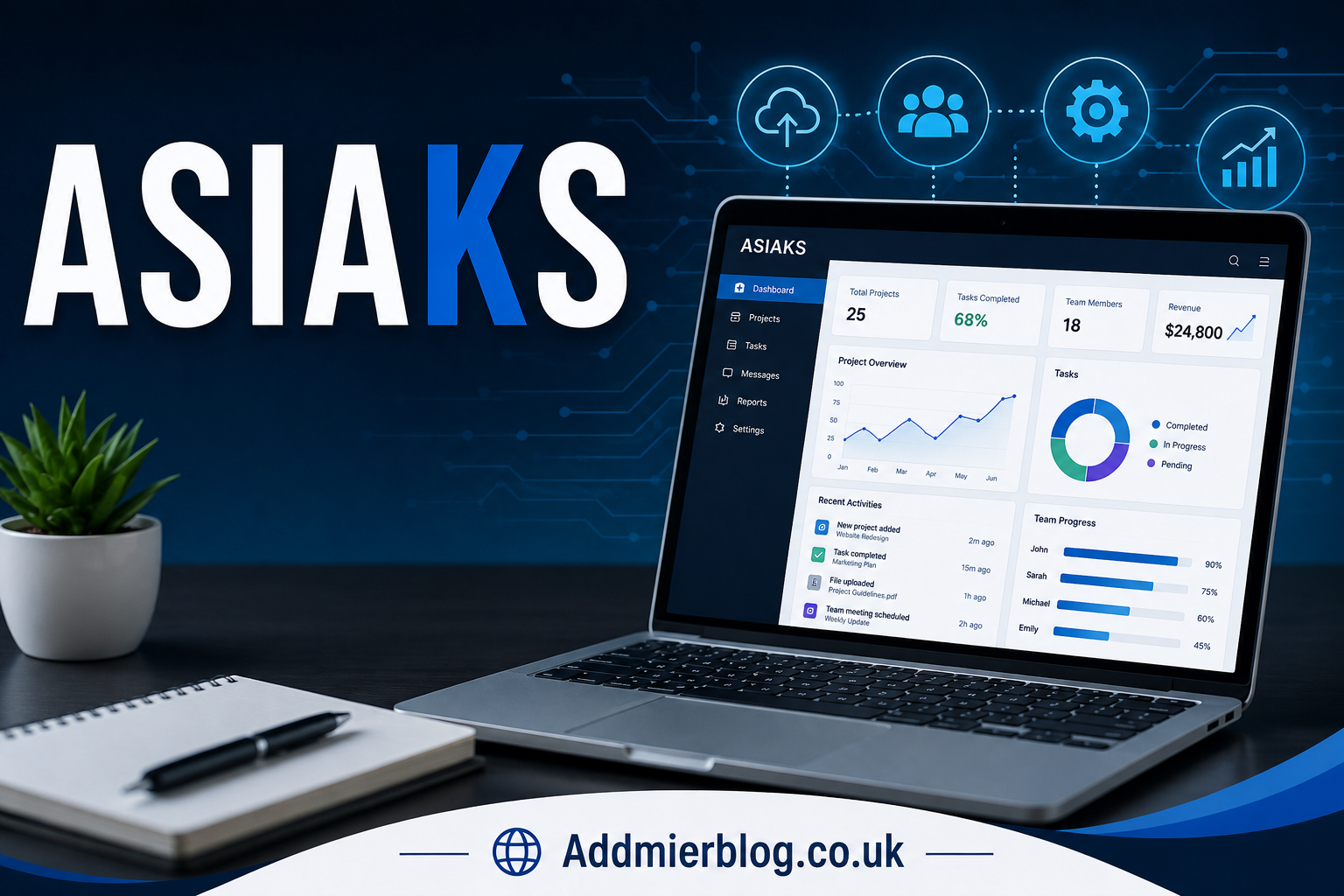
Understanding Asiaks
Asiaks is a technology-related concept that can represent a digital platform, software solution, or online system designed to improve the way individuals and organizations manage information, communication, and daily operations. Although the name is not widely recognized as a standard technology term, it can be understood as a modern digital framework that combines different technologies to solve practical problems.
Technology continues to evolve through platforms that simplify complex tasks. Asiaks follows this direction by focusing on efficiency, organization, and accessibility. Instead of replacing existing systems entirely, it can work alongside them, helping users complete tasks more quickly while reducing manual effort. Whether used by businesses, educational institutions, or individuals, the main purpose remains the same: making digital processes more manageable.
This reduces the need to switch between different applications and improves the overall user experience.
The Purpose of Asiaks
Every technology platform is created to solve a specific problem. Asiaks aims to improve digital workflows by bringing together tools that support communication, information management, automation, and collaboration.
Many organizations deal with scattered data stored across multiple applications. Employees may spend unnecessary time searching for files, updating records, or coordinating tasks through several communication channels. A centralized platform reduces these issues by providing one location where information can be stored, accessed, and managed.
Individuals can also benefit from such systems by organizing personal projects, managing schedules, storing documents, and tracking progress. Rather than depending on multiple disconnected applications, users can perform several activities within one structured platform.
Core Features of Asiaks
Although features may vary depending on implementation, most technology platforms similar to Asiaks include several common capabilities.
Centralized Information Management
One of the primary functions is collecting information in a single location. Instead of maintaining separate databases or folders across multiple systems, users can organize files, documents, reports, and records within one environment.
This approach improves accessibility while reducing duplication and confusion.
User-Friendly Dashboard
A well-designed dashboard allows users to monitor activities without navigating through complicated menus. Important notifications, pending tasks, project updates, and recent activities appear in one place, helping users stay informed.
A simple interface also reduces the learning curve for new users.
Task Management
Many organizations rely on task management systems to monitor progress and assign responsibilities. Asiaks may include tools for creating tasks, setting deadlines, assigning team members, and tracking completion status.
These features help teams remain organized while improving accountability.
Collaboration Tools
Modern workplaces depend heavily on collaboration. Instead of relying entirely on email communication, platforms like Asiaks often include shared workspaces, messaging systems, document sharing, and collaborative editing.
These tools allow teams to work together regardless of physical location.
Cloud Accessibility
Cloud-based technology enables users to access information from different devices. Employees working remotely or traveling can continue their work without being limited to a single computer.
Cloud access also improves backup and disaster recovery since data is stored securely rather than only on local devices.
Reporting Functions
Organizations often require reports to evaluate performance, monitor productivity, and make informed decisions. Reporting tools generate summaries using collected data, making it easier for managers to identify trends and measure results.
Automated reporting also saves significant time compared to manual calculations.
How Asiaks Works
The operation of Asiaks depends on collecting, organizing, processing, and presenting information.
Users first enter data into the platform through forms, uploads, or automated integrations. The system stores this information within structured databases where it can later be retrieved whenever needed.
Once data is available, different tools process it according to user requirements. For example, tasks may automatically move through different stages, reminders may be generated before deadlines, and reports may update whenever new information becomes available.
Permissions control who can access specific information. Administrators typically manage user accounts, assign roles, and define security settings to ensure that confidential information remains protected.
Automation reduces repetitive work by performing routine actions without requiring constant manual input.
Benefits of Using Asiaks
Organizations adopt digital platforms because they improve efficiency while reducing unnecessary complexity.
One important benefit is better organization. Keeping information in one location reduces time spent searching through emails, spreadsheets, or paper files.
Another advantage is improved communication. Team members can exchange updates more quickly when everyone works within the same platform.
Automation also contributes to higher productivity. Routine administrative work such as reminders, notifications, and status updates can occur automatically, allowing employees to focus on more valuable tasks.
Decision-making improves because managers have access to updated reports and organized information instead of relying on outdated records.
Cost savings may also result from replacing multiple software subscriptions with one integrated platform.
Applications Across Different Industries
Technology platforms become more valuable when they support different sectors rather than serving only one industry.
Business Operations
Companies can use Asiaks to manage projects, coordinate departments, monitor employee performance, and organize customer information.
Managers gain greater visibility into ongoing activities while employees receive clear instructions regarding assigned work.
Education
Educational institutions may use the platform to manage student records, assignments, schedules, attendance, and communication between teachers and students.
Digital systems simplify administrative work while improving access to educational resources.
Healthcare
Healthcare providers require accurate record management and secure communication.
A structured digital platform can support appointment scheduling, patient information management, internal communication, and administrative reporting while maintaining appropriate security measures.
Government Services
Government departments often process large amounts of public information.
Technology platforms help organize records, manage workflows, improve communication between departments, and provide more efficient public services.
Small Businesses
Smaller organizations frequently operate with limited staff and resources.
Using one centralized platform allows business owners to manage customers, inventory, invoices, schedules, and documents without investing in multiple independent systems.
Security and Data Protection
Users expect their information to remain confidential while organizations must comply with data protection regulations.
Asiaks may include several security measures such as encrypted communication, password protection, user authentication, role-based permissions, activity logs, and secure cloud storage.
Regular software updates help address vulnerabilities before they become significant security risks.
Organizations should also educate users about safe password practices and responsible handling of sensitive information.
Integration With Other Technologies
Modern businesses rarely rely on one application alone.
Instead, different software products exchange information through integrations.
Asiaks can become more useful when connected with accounting software, customer relationship management systems, cloud storage services, communication platforms, and productivity tools.
Integration reduces duplicate data entry while maintaining consistency across different business operations.
Application Programming Interfaces (APIs) often make these connections possible by allowing different systems to exchange information automatically.
Challenges of Implementation
Introducing any new technology requires planning.
One challenge involves employee training. Users must understand how to operate the system effectively before organizations receive its full benefits.
Another challenge involves data migration. Existing records stored in spreadsheets or older software may require careful transfer into the new platform.
Organizations may also encounter resistance from employees who are comfortable with existing workflows.
Technical support, proper documentation, and gradual implementation help reduce these challenges.
Budget planning is equally important because organizations must consider software costs, maintenance, customization, and ongoing support.
Best Practices for Successful Adoption
Organizations can improve implementation success by following several practical strategies.
Management should clearly explain why the platform is being introduced and how it benefits employees.
Training sessions should focus on real tasks instead of only technical demonstrations.
Data should be organized before migration to avoid transferring outdated or duplicate information.
Regular feedback from users helps identify problems that require improvement.
Periodic software updates ensure that new features and security improvements remain available.
Future Development of Platforms Like Asiaks
Digital platforms continue to evolve alongside emerging technologies.
Artificial intelligence may automate routine decisions, analyze large datasets, and provide recommendations based on user behavior.
Machine learning can improve system accuracy by identifying patterns over time.
Cloud computing will likely continue expanding accessibility while reducing infrastructure requirements.
Mobile compatibility will remain important because users increasingly expect full functionality from smartphones and tablets.
Automation will also become more advanced, reducing repetitive administrative work across many industries.
Future versions of platforms similar to Asiaks may focus on stronger analytics, improved collaboration, enhanced cybersecurity, and deeper integration with other digital services.
Why Digital Platforms Continue to Grow
Organizations increasingly rely on technology because manual processes become difficult to manage as operations expand.
Centralized systems improve consistency, reduce paperwork, simplify communication, and provide better visibility into ongoing work.
Businesses also benefit from faster decision-making because managers have immediate access to organized information rather than waiting for manual reports.
Employees appreciate systems that reduce repetitive tasks and provide clear workflows.
Customers often experience better service because organizations can respond more efficiently using organized digital information.
Conclusion
Asiaks represents the broader direction of modern technology platforms that combine organization, collaboration, automation, and secure information management within a unified environment. Whether implemented by businesses, educational institutions, healthcare providers, government agencies, or individual professionals, the platform supports more efficient workflows by reducing manual effort and improving access to information.
The long-term value of Asiaks depends on proper implementation, user training, data security, and continuous improvement. As technology continues to advance, platforms built around integration, automation, and cloud accessibility will remain important tools for organizations seeking better productivity, stronger collaboration, and more effective digital operations.